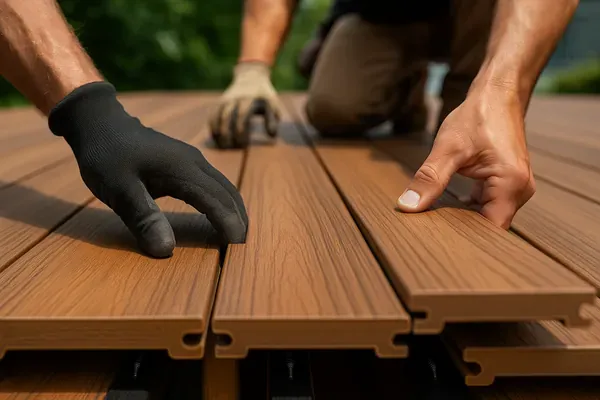
Why Choose Composite Decking for Your Franklin Home
Composite decking has revolutionized outdoor living spaces across Franklin, Tennessee. Made from a carefully engineered blend of recycled wood fibers and high-performance plastics, composite deck materials offer the natural beauty of wood without the constant maintenance headaches.
Unlike traditional wood decking that requires annual staining, sealing, and frequent repairs, composite decking maintains its appearance and structural integrity for decades. This makes it an ideal choice for Franklin homeowners who want to maximize their time enjoying their outdoor space rather than maintaining it.
The initial investment in composite deck installation Franklin homeowners make typically pays for itself within five to seven years through reduced maintenance costs and increased home value.

Leading Composite Decking Brands We Install
Trex Composite Decking
Trex remains the most recognized name in composite decking, offering three distinct product lines to fit different budgets and performance requirements. Their Transcend line features deep wood-grain textures and fade resistance, while Select provides excellent value with reliable performance. The Enhance series sits in the middle, offering enhanced stain resistance with realistic wood appearance.
Trex decking comes with industry-leading warranties, typically 25 years for residential installations. The brand's commitment to using 95% recycled materials.
TimberTech Composite Options
TimberTech produces some of the most realistic-looking composite decking available today. Their AZEK line uses 100% PVC construction for maximum moisture resistance, making it perfect for pool areas or locations with high humidity.
The TimberTech PRO series combines durability with authentic wood aesthetics, featuring random-width planks that mimic natural lumber variations. Their Edge series provides an affordable entry point into composite decking without sacrificing quality.
Fiberon Decking Solutions
Fiberon's composite decking stands out for its deep embossing and color consistency. Their Horizon line offers excellent stain and fade resistance, while the Good Life series provides budget-friendly composite options that still outperform traditional wood.
Fiberon's PermaColor technology ensures colors stay vibrant even under Tennessee's intense summer sun, making it a smart choice for south-facing decks that receive full sun exposure.
Composite vs Wood Decking Comparison
Maintenance Requirements
Wood decking demands significant ongoing maintenance. Pressure-treated lumber requires annual cleaning and staining to prevent weathering, warping, and insect damage. Cedar and redwood need similar care, plus regular inspection for loose boards and protruding nails.
Composite decking maintenance involves occasional cleaning with soap and water. No staining, sealing, or sanding is required. Most manufacturers recommend power washing annually to remove pollen and debris, but this takes hours rather than days.
Durability and Longevity
Quality composite decking lasts 25 to 30 years with minimal maintenance. It resists splintering, warping, and cracking that plague wood decks. Composite materials won't attract termites or carpenter ants, common problems with wood decking in Middle Tennessee.
Wood decks typically require major repairs or replacement within 10 to 15 years, depending on maintenance quality and wood species selected.
Weather Performance
Franklin's climate presents unique challenges for outdoor materials. Hot, humid summers followed by freeze-thaw cycles stress traditional materials. Composite decking handles these conditions better than wood, maintaining dimensional stability and appearance.
Modern composite materials resist moisture absorption that causes wood to warp and rot. The polymer shell on capped composite boards provides additional protection against water penetration.
Color and Texture Options
Realistic Wood Grain Patterns
Today's composite decking features sophisticated embossing that replicates natural wood grain patterns. Multiple board molds create variation that mimics the random patterns found in real lumber.
Deep embossing adds texture that feels natural underfoot while providing slip resistance when wet. This texture also helps hide minor scratches and scuffs that might occur during normal use.
Color Selection Guide
Earth Tones: Browns and tans complement traditional home exteriors and blend naturally with landscaping. These colors hide dirt and debris between cleanings.
Gray Options: Gray composite decking has gained popularity for its modern appearance and ability to complement both contemporary and traditional architecture.
Multi-Tonal Boards: Premium composite planks feature color variation within individual boards, creating the natural variation found in real wood.
Fade Resistance: Look for composite decking with advanced UV protection. Quality brands guarantee minimal color change over 10 to 20 years.
Professional Composite Deck Installation Process
Site Preparation and Planning
Our composite deck installation Franklin process begins with thorough site evaluation. We assess soil conditions, drainage, and local building code requirements. Proper planning prevents issues that could compromise your deck's longevity.
We obtain all necessary permits and ensure compliance with Franklin's building codes and HOA requirements where applicable.
Foundation and Framing
Composite decking requires proper support structure, typically 16-inch joist spacing compared to 24 inches for some wood applications. We use pressure-treated lumber for framing to provide long-term structural integrity.
Proper ventilation under composite decking prevents moisture buildup and ensures optimal performance. We install blocking and bridging according to manufacturer specifications.
Installation Techniques
Composite boards expand and contract with temperature changes, requiring specific installation techniques. We use manufacturer-approved fasteners and maintain proper spacing between boards for thermal movement.
Hidden fastener systems create clean appearance without visible screws on the deck surface. These systems also allow boards to move naturally without binding or buckling.
Finishing Details
Railing, trim, and fascia boards complete your composite deck installation. We match materials for consistent appearance or create contrast for visual interest. Proper flashing and drainage details protect the underlying structure.
Cost Analysis and Value Proposition
Initial Investment Considerations
Composite deck installation typically costs 50% to 100% more than pressure-treated wood initially. However, this cost difference diminishes when you factor in long-term maintenance savings.
Premium composite brands command higher prices but offer superior performance and longer warranties. We help you select materials that fit your budget while meeting performance expectations.
Long-Term Financial Benefits
Maintenance costs for wood decking average several hundred dollars annually for materials and labor. Over 20 years, these costs often exceed the initial price difference between wood and composite materials.
Composite decking also adds more value to your home than wood decking. Real estate professionals note that composite decks appeal to buyers who want outdoor living spaces without maintenance concerns.
Return on Investment
Deck additions typically return 60% to 80% of their cost at resale. Composite decks often achieve higher returns due to their perceived value and move-in ready condition.
Many Franklin homeowners find their composite deck becomes the focal point for family gatherings and entertainment, adding immeasurable lifestyle value beyond financial returns.
Maintenance and Care Guidelines
Routine Cleaning Procedures
Composite decking requires minimal maintenance, but regular cleaning maintains its appearance. Sweep debris weekly to prevent organic matter from staining the surface.
For general cleaning, use mild dish soap and warm water. Scrub gently with a soft brush, then rinse thoroughly. Avoid harsh chemicals or pressure washers set above 1500 PSI.
Stain Removal Techniques
Most stains can be removed with appropriate cleaners. Oil-based stains respond to degreasing agents, while organic stains like leaves or berries clean up with oxygen bleach solutions.
For stubborn stains, composite deck cleaners are available from most manufacturers. These products are formulated specifically for composite materials and won't damage the surface.
Seasonal Maintenance Tasks
Spring cleaning should include thorough washing and inspection of fasteners and railings. Remove any debris that accumulated between boards during winter months.
Fall maintenance involves removing leaves promptly to prevent staining. Clear gutters and downspouts to prevent water from pooling on your deck surface.
Climate Considerations for Franklin
Heat and UV Exposure
Franklin's intense summer sun can cause some composite materials to become uncomfortably hot. Light-colored boards stay cooler than dark options, making them more comfortable for bare feet.
Quality composite decking includes UV inhibitors that prevent color fading and material degradation. Look for products with proven track records in southern climates.
Moisture and Humidity Management
Tennessee's high humidity requires proper drainage around deck areas. We ensure water drains away from your home's foundation and doesn't pool under the deck structure.
Ventilation gaps between composite boards allow air circulation that prevents moisture buildup. Proper installation techniques prevent water from penetrating the deck system.
Choosing the Right Composite Deck Contractor
Experience and Expertise
Composite deck installation requires specialized knowledge of material properties and installation techniques. Different brands have specific requirements that must be followed to maintain warranty coverage.
Our team stays current with manufacturer training and certification programs. We understand the nuances of working with composite materials and avoid common installation mistakes.
Quality Assurance Process
We follow detailed installation procedures that ensure your composite deck performs as intended. This includes proper fastener selection, spacing requirements, and finishing details.
Our quality checks at each installation phase prevent issues that could affect your deck's appearance or longevity. We also provide detailed care instructions to help you maintain your investment.
Environmental Benefits
Recycled Content
Most composite decking contains 90% to 95% recycled materials, including reclaimed wood fibers and recycled plastic bags and films. This diverts waste from landfills while creating durable building materials.
Choosing composite decking supports circular economy principles by giving new life to materials that would otherwise be discarded.
Forest Conservation
Composite decking reduces demand for virgin lumber, helping preserve forests for future generations. One composite deck can incorporate recycled material equivalent to thousands of plastic bags.
Longevity Reduces Waste
The extended lifespan of composite decking means fewer replacements over time. This reduces construction waste and the environmental impact associated with frequent deck rebuilds.