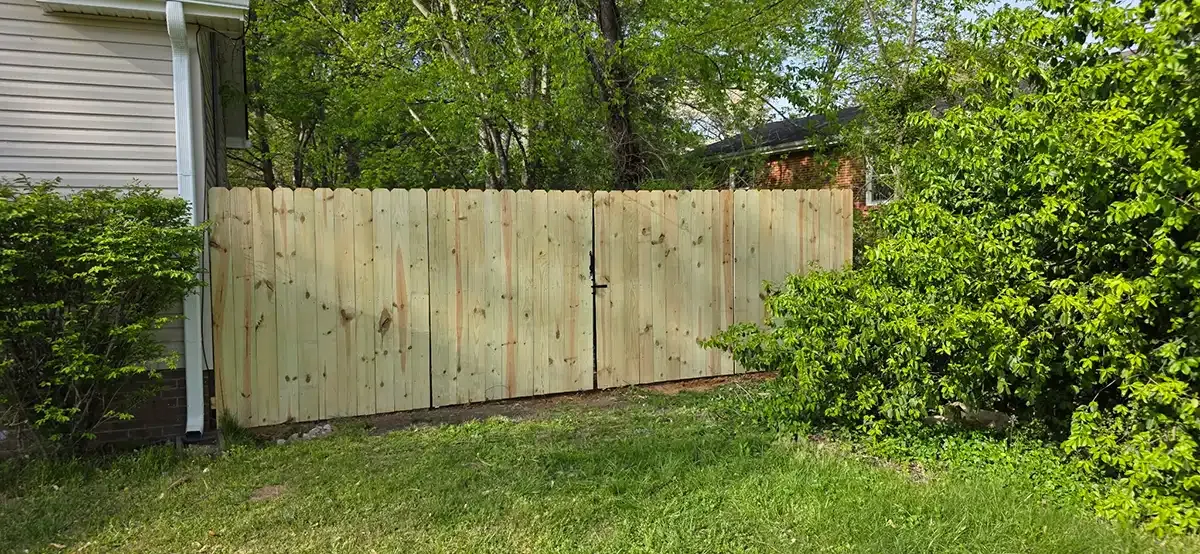
Why Choose Professional Fence Installation in Franklin TN
Installing a fence involves more than just setting posts and attaching panels. Property line surveys, permit applications, material selection, and proper installation techniques all require expertise. Our Franklin-based team handles every aspect of your fencing project, from initial planning through final inspection.
We understand Franklin's specific requirements, from HOA guidelines in established neighborhoods to permit processes with Williamson County. This local knowledge ensures your fence meets all regulations while enhancing your property's value and functionality.
Fencing Materials: Finding the Right Fit for Your Property
Wood Fencing
Wood remains the most popular choice for residential properties in Franklin. Cedar and pressure-treated pine offer natural beauty with different maintenance requirements. Cedar resists insects and decay naturally, while pressure-treated lumber provides affordability with chemical protection. Both materials accept stains and paints well, allowing customization to match your home's style.
Wood fences typically last 15-20 years with proper maintenance. Annual cleaning and staining every 3-4 years preserve the wood's appearance and extend its lifespan.

Vinyl Fencing
Vinyl fencing delivers consistent appearance with minimal maintenance requirements. The material won't crack, peel, or fade when properly manufactured. Quality vinyl systems use reinforced rails and posts to handle Tennessee's weather conditions, including high winds and temperature fluctuations.
Initial costs run higher than wood, but vinyl's longevity and low maintenance often provide better long-term value. The material cleans easily with soap and water, requiring no staining or painting.
Aluminum Fencing
Aluminum combines durability with elegant appearance, particularly around pools or formal landscaping. The powder-coated finish resists rust and maintains color consistency. Installation involves fewer maintenance concerns compared to wood, with occasional cleaning being the primary requirement.
This material works well for decorative applications and areas requiring visibility while maintaining boundaries. Height options range from 3 feet for garden borders to 6 feet for privacy applications.
Chain Link Fencing
Chain link provides security and pet containment at affordable prices. Modern chain link systems include privacy slats, colored coatings, and improved hardware for enhanced appearance. Galvanized coatings protect against rust, while vinyl-coated options add color choices.
Installation requires proper tensioning and secure corner assemblies for long-term stability. Professional installation ensures gates operate smoothly and fabric maintains proper tension.
Property Line Considerations for Franklin Homeowners
Accurate property boundary identification prevents costly disputes and potential fence relocation. Tennessee law requires fences to remain on your property, making professional surveys essential for new installations.
We coordinate with local surveyors when boundary questions arise. Many Franklin neighborhoods have established fence lines that simplify the process, but verification protects your investment. Corner markers and existing fences don't always indicate actual property lines, particularly in older subdivisions.
Setback requirements vary by neighborhood and fence height. Some areas require fences to sit 6 inches inside property lines, while others allow boundary installation. We research your specific location's requirements before beginning work.
Permit Requirements in Franklin and Williamson County
Most Franklin fence installations require permits, particularly for fences over 4 feet tall or those near property lines. The permit process involves submitting plans showing fence location, height, and materials. Processing typically takes 2-3 weeks, which we factor into project scheduling.
We handle permit applications as part of our service, ensuring compliance with local codes. This includes researching utility locations, HOA requirements, and zoning restrictions that might affect your project.
Some neighborhoods have additional requirements through homeowner associations. These might include specific materials, colors, or installation details beyond city requirements. We review all applicable guidelines before finalizing designs.
Fence Installation Process
Site Evaluation and Planning
Every project begins with thorough site evaluation. We identify slopes, utilities, drainage patterns, and soil conditions that affect installation methods. This information determines post spacing, foundation requirements, and material specifications.
Utility marking through Tennessee 811 occurs before any excavation. This free service identifies buried lines, preventing dangerous accidents and service disruptions.
Foundation and Post Installation
Properly set posts provide the foundation for long-lasting fences. Post depth varies by fence height and soil conditions, typically extending 2-3 feet below ground level. Concrete footings secure posts against frost heave and settling.
We allow concrete to cure properly before attaching rails and panels. Rushing this process compromises the entire installation's stability.
Panel and Hardware Installation
Rails and panels attach with appropriate hardware for each material type. Proper spacing ensures gates operate smoothly and panels remain secure during storms. We check alignment throughout installation, maintaining consistent height and spacing.
Gate hardware receives particular attention, as these components experience the most stress during normal use. Quality hinges and latches ensure years of reliable operation.
Maintenance Expectations by Material Type
Wood Fence Maintenance
Wood fences require the most ongoing maintenance but offer the most customization options. Annual inspections identify loose boards, protruding nails, and early decay signs. Power washing removes dirt and mildew, preparing surfaces for stain application.
Staining every 3-4 years maintains weather protection and appearance. This interval varies based on sun exposure and local weather conditions. Prompt repair of damaged sections prevents problems from spreading.
Low-Maintenance Options
Vinyl and aluminum fences require minimal ongoing care. Annual cleaning with mild detergent maintains appearance. Occasional hardware checks ensure gate operation remains smooth.
These materials resist Franklin's weather conditions well, maintaining appearance without regular refinishing. Damage typically requires panel replacement rather than repair, but occurs infrequently with quality materials.
Design Options for Franklin Properties
Fencing style should complement your home's architecture while serving its intended function. Traditional picket fences suit historic Franklin homes, while contemporary horizontal designs match modern construction.
Height selections balance privacy needs with neighborhood aesthetics. Six-foot privacy fences provide complete screening, while 4-foot options maintain openness. Stepped installations accommodate sloped lots while maintaining consistent rail heights.
Gate placement affects daily use patterns and landscape design. We position gates for convenient access while maintaining security and appearance. Double gates accommodate larger equipment when needed.
Working with Franklin's Climate
Tennessee's climate presents specific challenges for fence installations. Hot, humid summers promote wood decay and metal corrosion, while occasional ice storms test structural integrity. Quality materials and proper installation techniques address these conditions.
Drainage considerations prevent water accumulation around posts, reducing rot and settling risks. We grade areas around installations to direct water away from fence foundations.
Expansion joints in long vinyl installations accommodate temperature changes. Proper spacing prevents buckling during hot weather while maintaining appearance during temperature drops.